
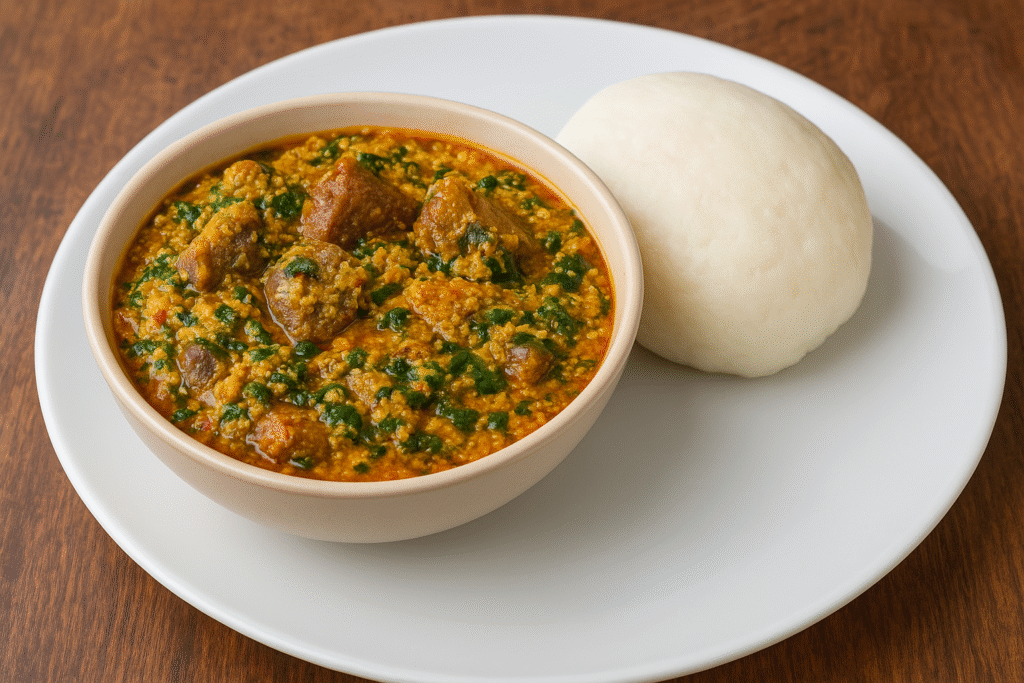
Egusi soup is one of Nigeria’s most beloved traditional dishes, celebrated for its rich flavor, creamy texture, and versatility. Whether served with pounded yam, fufu, eba, or rice, this hearty soup has earned a special place in Nigerian kitchens and hearts alike. Made from ground melon seeds, leafy vegetables, meat, and spices, Egusi soup is not only delicious but also packed with nutrients, making it a wholesome choice for lunch or dinner.
For many home cooks, the thought of making authentic Egusi soup can be intimidating. Questions like “How do I get the perfect texture?” or “Which ingredients make it taste just like Grandma used to cook?” often come to mind. The good news is that with the right guidance, anyone can make Egusi soup that tastes rich, flavorful, and truly authentic.
In this step by step guide, we will walk you through everything you need to know from selecting the right ingredients to cooking techniques that bring out the perfect flavor. By the end of this post, you will have all the tools and knowledge to create Egusi soup that rivals even the best Nigerian restaurants.
Ingredients
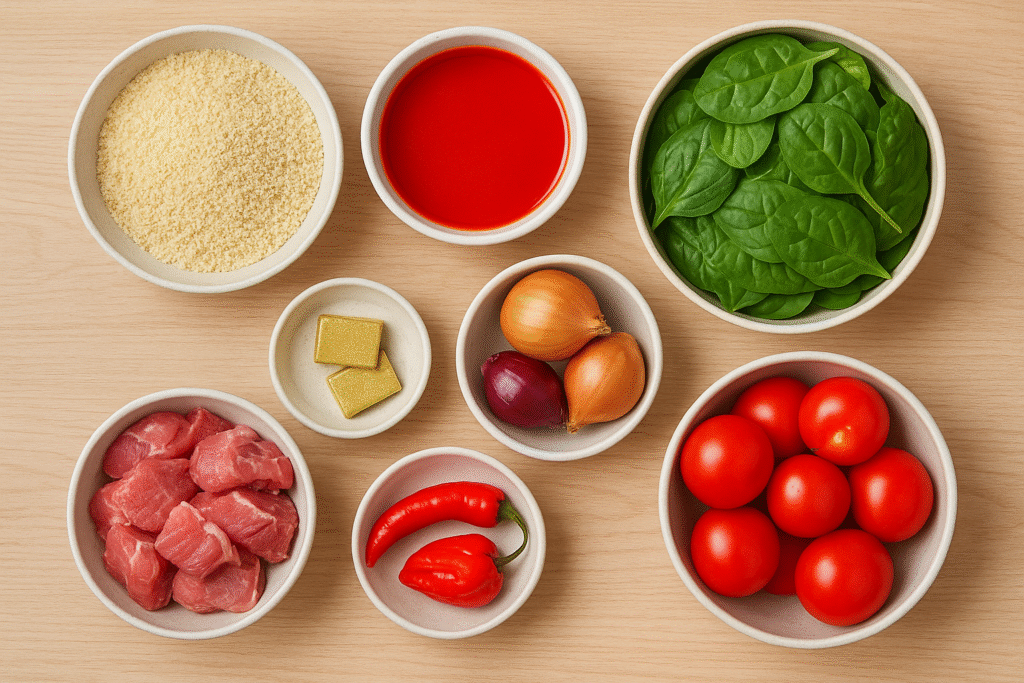
To make authentic Egusi soup, you will need the following ingredients. These quantities serve about 4 to 6 people.
Main Ingredients
- 2 cups of ground Egusi seeds (melon seeds)
- 1/2 cup palm oil
- 500 grams of assorted meat (beef, goat, or chicken)
- 200 grams stockfish or dried fish
- 1 medium onion, chopped
- 2 tablespoons ground crayfish
- 2 to 3 tablespoons ground pepper (adjust to taste)
- 1 teaspoon salt (adjust to taste)
- 2 seasoning cubes
Vegetables
- 2 cups chopped spinach, ugu leaves, or bitterleaf
Optional Ingredients
- 1 smoked fish
- 1 tablespoon ground locust beans (iru) for extra flavor
Notes on Ingredients
- You can use a mix of meat and fish or make it entirely vegetarian using mushrooms or tofu.
- Fresh spinach, ugu, or bitterleaf adds authentic taste and nutrition to the soup.
Nutrition Information
Here is an approximate nutrition breakdown per serving of Egusi soup:
| Nutrient | Amount (Approx.) |
|---|---|
| Calories | 450 kcal |
| Protein | 25 g |
| Fat | 32 g |
| Carbohydrates | 10 g |
| Fiber | 4 g |
| Sodium | 600 mg |
| Vitamins & Minerals | Rich in Iron, Vitamin A, Magnesium |
Notes:
- Nutrient values depend on ingredients and portion size.
- Using more vegetables can lower calories while adding more meat increases protein and fat.
Read on Top 10 Igbo Nigerian Dishes You Need to Try
Equipment Needed
Making authentic Egusi soup does not require complicated tools. With a few basic kitchen items, you can prepare this delicious Nigerian dish easily.
Essential Tools
- Large pot or saucepan: To cook the meat, fish, and soup.
- Blender or mortar and pestle: For grinding the Egusi seeds into a smooth paste.
- Wooden spoon or spatula: For stirring the soup without scratching your pot.
- Knife and cutting board: To chop vegetables and onions.
Optional Tools
- Strainer: To rinse leafy vegetables thoroughly.
- Measuring cups and spoons: To ensure accurate ingredient portions for consistent flavor.
Tips:
- Using a heavy-bottomed pot helps prevent the soup from burning while simmering.
- A mortar and pestle gives a more authentic texture for the Egusi paste compared to a blender, but a blender works fine for convenience.
Read On Top 10 Fast Food Restaurants in Nigeria (Where to Eat in 2025)
Preparation Steps
Cooking authentic Egusi soup is simple when you follow the steps carefully. Here is a step-by-step guide to help you achieve the perfect texture and flavor.
Step 1: Prepare the Meat and Stock
- Wash and cut your meat into bite-sized pieces.
- Place the meat in a pot, add chopped onions, seasoning cubes, and salt.
- Add water to cover the meat and boil until tender.
- If using stockfish or dried fish, soak them in warm water for 10-15 minutes to soften, then set aside.
Tip: Boiling the meat first ensures a rich, flavorful stock for your soup.
Step 2: Blend or Grind the Egusi Seeds
- Use a blender or mortar and pestle to grind the Egusi seeds into a fine paste.
- You can mix a little water to make it easier to blend if needed.
Tip: Grinding the Egusi finely helps the soup thicken nicely and evenly.
Step 3: Fry the Egusi Paste with Palm Oil and Spices
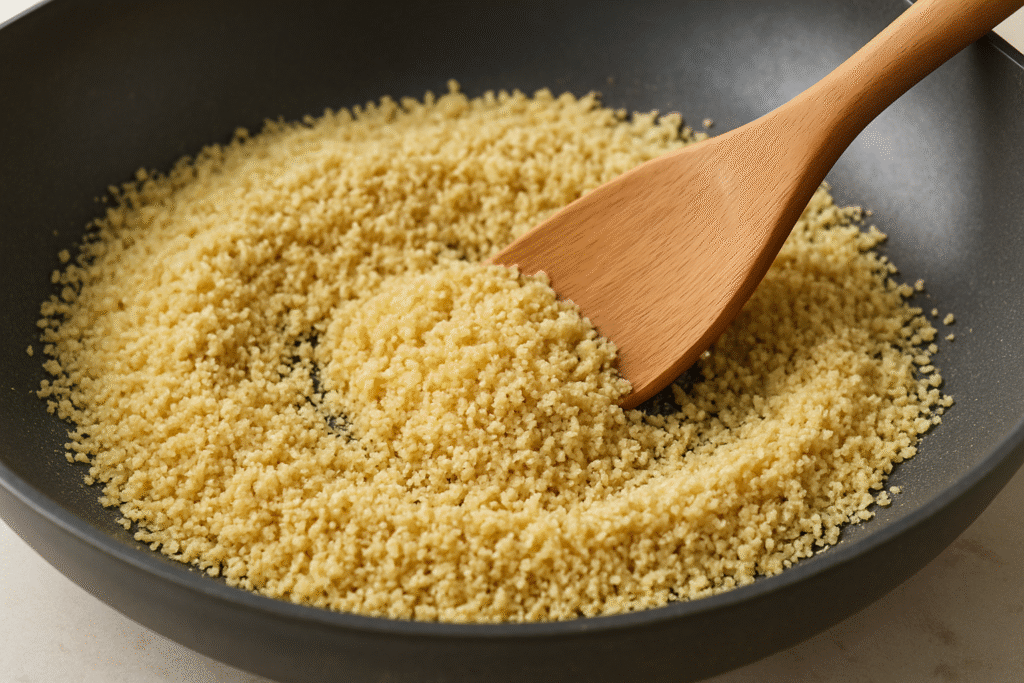
- Heat the palm oil in a large pot until it is hot but not smoking.
- Add the blended Egusi paste and stir continuously.
- Cook for about 5-7 minutes, allowing the Egusi to release its flavors.
- Add ground crayfish and pepper, stirring thoroughly.
Tip: Frying the Egusi paste properly prevents a raw taste and gives the soup its rich color.
Step 4: Add Stock, Meat, and Fish
- Pour in the meat stock gradually while stirring the Egusi mixture.
- Add the boiled meat, softened stockfish or dried fish, and any optional smoked fish.
- Allow the mixture to simmer for 10-15 minutes to blend the flavors.
Tip: Stir gently to prevent the Egusi from sticking to the bottom of the pot.
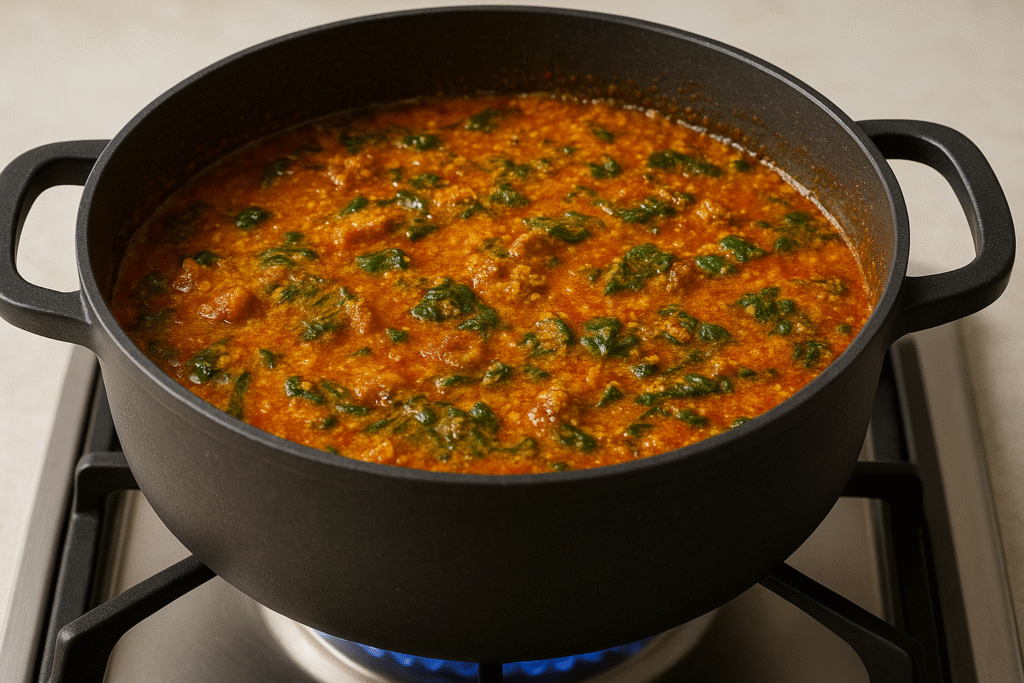
Step 5: Add Vegetables and Simmer Until Cooked
- Add your chopped spinach, ugu, or bitterleaf to the pot.
- Cook for another 5-10 minutes until the vegetables are tender but still vibrant.
Tip: Avoid overcooking the vegetables to preserve their color, nutrients, and texture.
Step 6: Adjust Seasoning and Consistency
- Taste the soup and adjust salt, pepper, or seasoning cubes as needed.
- If the soup is too thick, add a little water to reach your desired consistency.
- Simmer for a few more minutes before removing from heat.
Tip: The perfect Egusi soup should be thick, flavorful, and well-balanced with meat, fish, and vegetables.
Tips for Making Authentic Egusi Soup
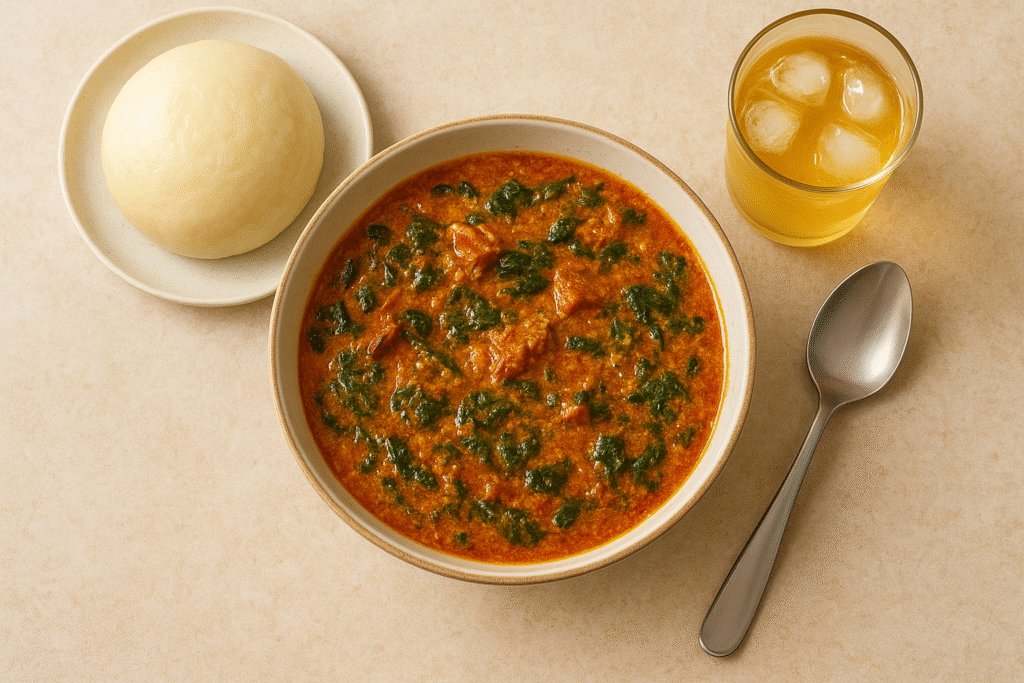
Even with a good recipe, a few extra tips can help you make Egusi soup that tastes just like it came from a traditional Nigerian kitchen.
Use the Right Egusi Paste
- Grind the Egusi seeds finely for a smooth texture, or coarsely if you prefer a slightly chunky soup.
- Avoid buying pre-ground Egusi that has been sitting too long as it may lose flavor.
Fry the Egusi Properly
- Frying the Egusi paste in hot palm oil before adding stock is crucial for flavor.
- Stir constantly to prevent burning and ensure even cooking.
Balance the Vegetables and Meat
- Use a mix of meat and fish for a richer taste.
- Vegetables like spinach, ugu, or bitterleaf should be added towards the end to preserve color and nutrients.
Adjust Consistency Carefully
- If the soup is too thick, add small amounts of water or stock.
- Too much liquid can make it watery, so add gradually while stirring.
Common Mistakes to Avoid
- Overcooking vegetables or frying Egusi too long.
- Using too much water, which dilutes flavor.
- Skipping seasoning checks – always taste and adjust before serving.
Tip: The key to authentic Egusi soup is patience, the right balance of ingredients, and attention to texture.
Serving Suggestions
Egusi soup is best enjoyed with traditional Nigerian staples. Serving it properly not only enhances the taste but also makes the meal more enjoyable.
Best Accompaniments
- Fufu: Soft and stretchy, fufu is the perfect companion for scooping up Egusi soup.
- Pounded Yam: Smooth and slightly sticky, it balances the thick, rich texture of the soup.
- Eba: Made from garri, eba is a popular choice for many Nigerians and pairs well with the soup.
- Rice: For a modern twist, Egusi soup can also be served with plain white rice or fried rice.
Portioning and Presentation Tips
- Serve a generous portion of soup alongside a moderate amount of fufu, yam, or rice.
- Garnish with a few fresh spinach or ugu leaves to make the dish look vibrant and appealing.
- Use a shallow bowl for soup and a separate plate for fufu or pounded yam for easy eating.
Tip: Egusi soup tastes even better when allowed to sit for 5-10 minutes after cooking, letting the flavors meld together.
FAQs / Common Questions
Can I Make Egusi Soup Without Meat?
Yes, you can make a delicious vegetarian Egusi soup using mushrooms, tofu, or just fish. The key is to add enough vegetables and seasoning to maintain a rich flavor.
Can I Freeze Egusi Soup?
Absolutely. Allow the soup to cool completely, then store it in an airtight container in the freezer. It can last up to one month. When reheating, add a little water or stock to restore the desired consistency.
How Long Does Egusi Soup Stay Fresh?
Freshly cooked Egusi soup can stay in the refrigerator for 3 to 4 days. Always store in an airtight container and reheat thoroughly before serving.
Can I Use Frozen Vegetables?
Yes, frozen spinach or ugu can be used, but fresh vegetables are preferred for the best flavor and texture. Add them towards the end of cooking to prevent overcooking.
How Do I Make the Soup Thicker?
To thicken Egusi soup, use slightly more ground Egusi seeds or cook it a little longer after adding the Egusi paste. Avoid adding too much water to maintain the authentic thick texture.
Conclusion
Making authentic Egusi soup at home is easier than many people think. With the right ingredients, proper preparation, and a few helpful tips, you can create a rich, flavorful soup that tastes just like it came from a traditional Nigerian kitchen.
Whether you serve it with fufu, pounded yam, eba, or rice, this hearty dish is sure to satisfy your family and friends. Don’t be afraid to experiment with different vegetables or proteins to suit your taste.
Try this step by step guide today and enjoy the taste of authentic Egusi soup in the comfort of your home. For more delicious Nigerian recipes, check out our posts on Nigerian stews, fufu recipes, and other traditional dishes.